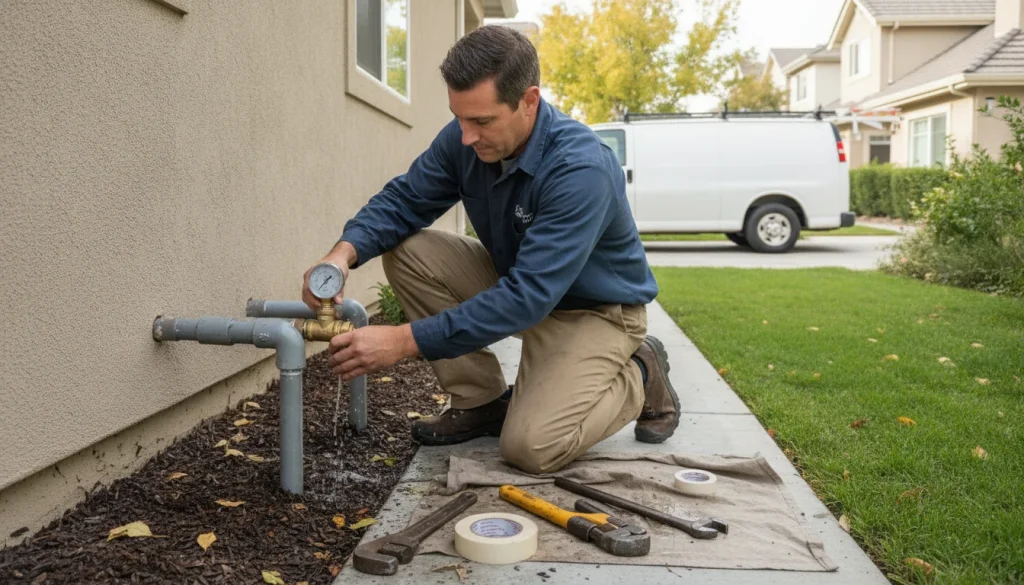
Do faucets hiss or bang when you turn them on? Do toilet fill valves chatter or your water heater pop? These are classic signs of water pressure too high. In plumbing terms, “too high” means a static reading above 80 psi; that level can shorten the life of pipes, valves, appliances, and water heaters. If the problem in Hudsonville is new, act early—excess pressure accelerates wear on fixtures and connections.
1. What “high” water pressure means and how to confirm it
In most US homes, normal pressure is 40–60 psi (pounds per square inch). Plumbing code limits static pressure (with no water running) to 80 psi. Anything above 80 psi is considered high and unsafe for your system.
A pressure gauge is a small tool that threads onto a hose bib or laundry tap and displays real-time pressure. To check:
- Choose a cold outdoor spigot or the laundry tap and screw the gauge on hand-tight.
- Make sure no water is running indoors, then read the static psi.
- Open a faucet indoors to observe drops and spikes.
- Leave the gauge on overnight. Many gauges have a red needle that records the peak; check it in the morning to spot spikes.
If your static pressure sits near 80 psi or the peak needle shows overnight surges above that, the system needs attention. When readings exceed 80 psi, that’s water pressure too high for safe operation. Short surges can happen in parts of Hudsonville during utility activity, but repeated spikes strain pipes, valves, and appliances.
2. Common causes of high water pressure
A pressure-reducing valve (PRV) lowers incoming street pressure to a safe level for the home. When a PRV is missing, failing, or out of adjustment, house pressure can drift—often too high.
Thermal expansion occurs when heated water takes up more space. In a closed system (one with a working check valve or PRV), pressure can rise quickly after the water heater fires. An expansion tank absorbs that growth; if it’s missing, undersized, or flat, pressure can spike and may trigger a water heater’s TPR (temperature and pressure relief) valve. Left unchecked, this can lead to the need for Water Heater Repair or even water heater replacement.
Municipal changes also matter. Hydrant testing, line flushing, or elevation differences near your block can push pressure higher at night. Homes across the Hudsonville area sometimes see brief surges during city work.
On well systems, the pressure switch controls the pump’s cut-in and cut-out settings. If set too high or out of balance with the pressure tank’s air charge, household pressure can exceed safe limits.
Hudsonville Plumbing works across Hudsonville every week and often finds a combination of issues—such as a tired PRV paired with a flat expansion tank, or street spikes made worse by the lack of a visible gauge on the system.
3. Safe fixes and preventative steps
If you’re handy, some checks are straightforward. For anything beyond basic adjustments, bring in a licensed plumber.
A PRV has an adjustment bolt that changes outlet pressure. Always turn off water first, adjust in small increments, and verify with a gauge each time. If the PRV is old, corroded, or won’t hold a steady set point, replacement is safer than forcing it.
An expansion tank’s air charge should match the home’s cold static pressure. Use a tire gauge at the tank’s Schrader valve (with water pressure relieved). Add air to match the home’s cold psi. If the tank is waterlogged or loses air, replace it. Add a properly sized tank if your closed system lacks one. Persistent TPR discharge after adjustments is a sign to consider Water Heater Repair; older, inefficient units may warrant Water Heater Installation or water heater replacement.
A few smart protections help long term:
- Install a whole-home gauge (or two) where you can see them.
- Log readings morning and evening for a week.
- Add hammer arrestors at quick-closing valves to reduce banging.
- Use appliance hoses rated for high pressure and check them yearly.
If you are on a well, have the pressure switch checked against the tank’s precharge, which is usually set a little below the pump’s cut-in pressure. The switch has live electrical parts, so leave adjustments to a pro. Common pairs are 30/50 or 40/60. Maintain at least a 20 psi spread so the pump doesn’t short-cycle. While you’re addressing supply issues, check for gurgling or slow drains after pressure events and consider Drain Cleaning if needed to keep drains flowing reliably.
4. When to call a plumber and what to expect
Call a pro when you see any red flags: 80+ psi, a water heater TPR valve dripping or opening, banging pipes, or recurring leaks at faucets, toilets, or washing machine hoses. These are all signs of water pressure too high.
A licensed plumber will test static and dynamic pressure, evaluate the PRV, check the expansion tank’s charge, and look for municipal pressure swings. Expect code-compliant solutions: PRV adjustment or replacement, a new or properly charged expansion tank, and guidance on gauges or arrestors. Some work may require permits. A reputable company will explain next steps, timelines, and manufacturer warranties for new parts.
Frequently Asked Questions
How do I know if my pressure is really too high?
Attach a screw-on gauge to a hose bib and read the static pressure with all taps off. If it’s above 80 psi—or the gauge’s peak needle shows overnight spikes above that—the system is running too high and needs a PRV check or other repair.
Can I just turn down the PRV myself?
You can try small PRV adjustments while watching a gauge. If the valve won’t hold a steady setting, or changes cause noise or spikes, stop and call a licensed plumber to test, size, and replace the PRV if needed.
Why does pressure climb after hot showers?
That’s likely thermal expansion. As the water heater runs, heated water expands and raises pressure in a closed system. An expansion tank absorbs that growth. If the tank is missing, undersized, or flat, pressure rises and may cause the TPR valve to discharge.
Key takeaways
- Normal home pressure is 40–60 psi; over 80 psi is unsafe.
- Confirm with a screw-on gauge and check the overnight peak needle.
- Main causes: failing PRV, thermal expansion, city surges, or well settings.
- Fixes include PRV service or replacement, a properly charged expansion tank, and ongoing monitoring.
- Call a pro for 80+ psi, TPR discharge, or repeated leaks and banging pipes.
Conclusion
High water pressure shortens the life of pipes, valves, water heaters, and appliances. Quick testing and the right repairs keep your Hudsonville home safe. If you’re dealing with water pressure too high Hudsonville Plumbing can inspect, test, and provide code-compliant repairs. Contact us.